New Research on the Use of Psychedelics in Early Nazca Culture
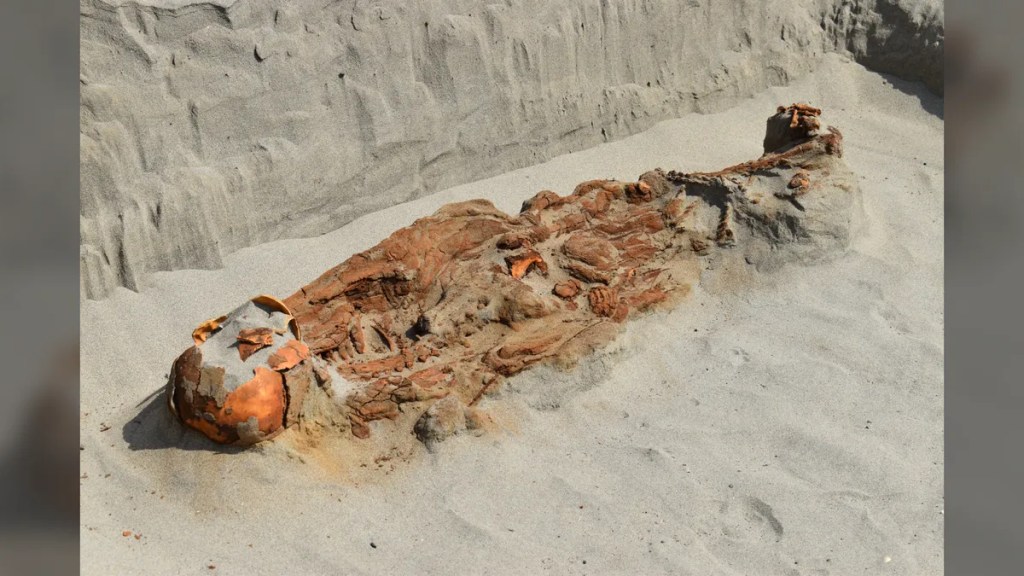
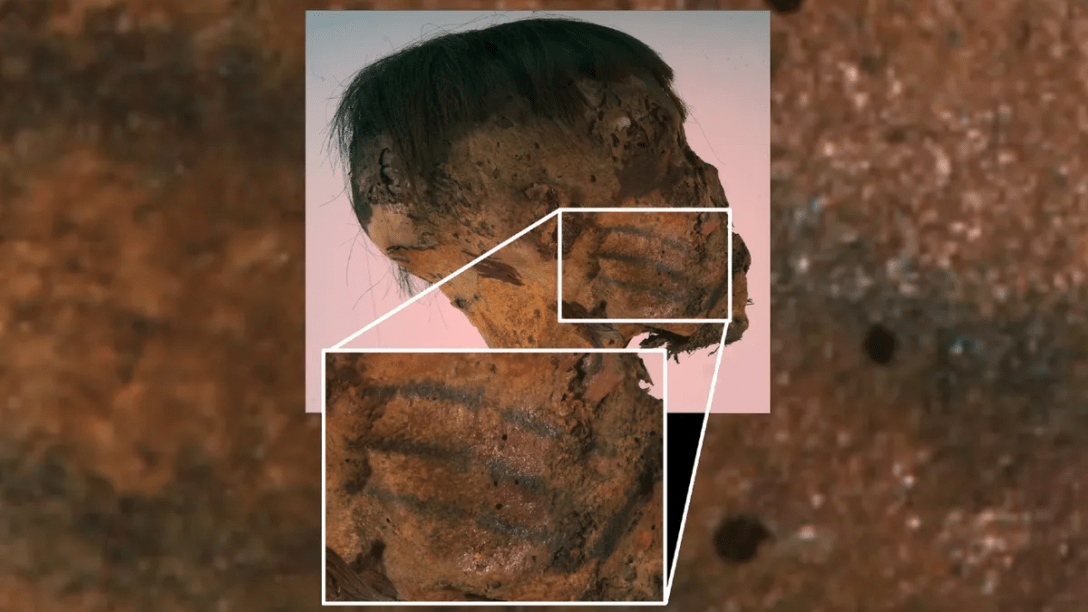
Researchers in Peru haver analyzed the remains of 22 individuals from the early Nazca culture (100 BCE-400 CE)at 3 Nazca sites. 4 of them were trophy heads, a child, an adult female and two male adults. They found a high level of mescaline from the San Pedro cactus in the sacrificed individuals and in the child’s hair. This cactus is known in the Quechua language as Huachuma, meaning “removing the head.” And the child and the other three had their heads removed after sacrifice. The female adult had also been chewing coca leaves. The male heads were free of drugs since they were males capture in combat.
More recent Inca civilization gave ayahuasca to child sacrifice victims as an anti-depressant while they awaited their fate. However, as the study authors note, “this is the first proof that some of the victims transformed into trophy heads were given stimulants prior to their death.”
The same study also found evidence of ayahuasca use among other mummified individuals from the Early Nazca Period – which ran from 100 BCE to 450 CE – and therefore provides the earliest archaeological evidence for the consumption of these two psychedelic plants.
Ayahuasca was found in the hair of two other individuals among the remaining 18. One had so much in his hair that it suggests he was a shaman. Coca was found in five others. This is the earliest evidence of the use of Ayahuasca and San Pedro ever found, and confirms the use of Coca leaves in the early Nazca culture.
The study has been published in the Journal of Archaeological Science.
New Research on the Use of Psychedelics in Early Nazca Culture
Researchers in Peru haver analyzed the remains of 22 individuals from the early Nazca culture (100 BCE-400 CE)at 3 Nazca sites. 4 of them were trophy heads, a child, an adult female and two male adults. They found a high level of mescaline from the San Pedro cactus in the sacrificed individuals and in the child’s hair. This cactus is known in the Quechua language as Huachuma, meaning “removing the head.” And the child and the other three had their heads removed after sacrifice. The female adult had also been chewing coca leaves. The male heads were free of drugs since they were males capture in combat.
More recent Inca civilization gave ayahuasca to child sacrifice victims as an anti-depressant while they awaited their fate. However, as the study authors note, “this is the first proof that some of the victims transformed into trophy heads were given stimulants prior to their death.”
The same study also found evidence of ayahuasca use among other mummified individuals from the Early Nazca Period – which ran from 100 BCE to 450 CE – and therefore provides the earliest archaeological evidence for the consumption of these two psychedelic plants.
Ayahuasca was found in the hair of two other individuals among the remaining 18. One had so much in his hair that it suggests he was a shaman. Coca was found in five others. This is the earliest evidence of the use of Ayahuasca and San Pedro ever found, and confirms the use of Coca leaves in the early Nazca culture.
The study has been published in the Journal of Archaeological Science.
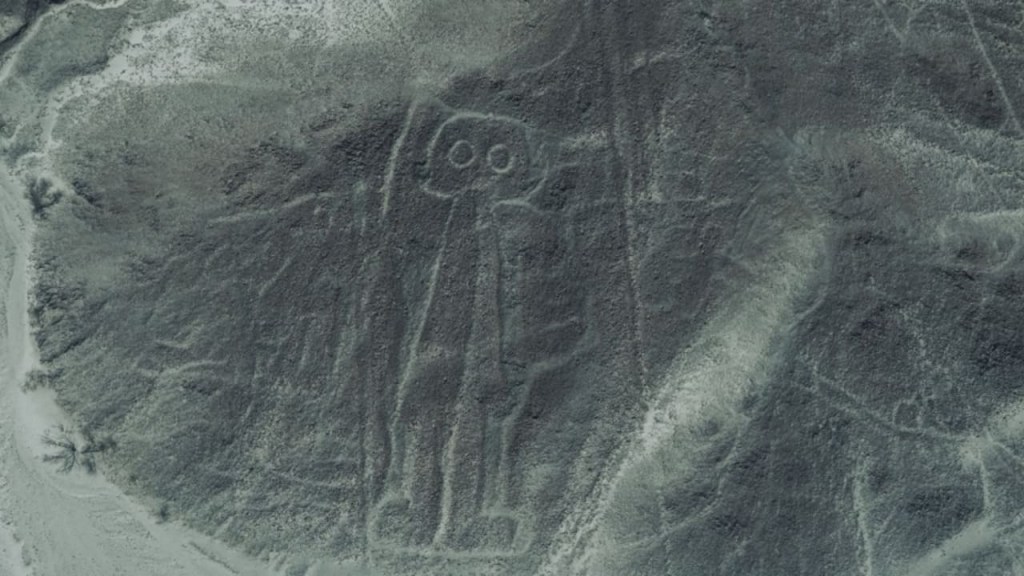
Archaeologists from Japan’s Yamagata University have discovered 168 new Nazca Lines on the Pampas de Juman in the Nazca Desert in southern Peru, the latest addition to over 800 straight lines, 300 geometric figures, and 70 animal and plant designs
The figures depict humans, camelids, birds, killer orca whales, cats, and snakes, and date to 100 BCE-300 C.E. Some measure just 10 or 20 feet long, which helps explain why they went undetected for so long. In comparison, the biggest geoglyphs measure about 1,200 feet across.
They conducted researcjwith drones, taking aerial photos, and conducting field surveys from June 2019 to February 2020, using high-resolution aerial photographs taken by drones. A.I. technology provided an assist in spotting and deciphering the age-old markings. The Nazca Lines can now be found across a 170-square-mile area.
only 5% of all existing Nazca lines have so far been found. These geoglyphs were created by removing black stones from the surface of the earth to expose a white sandy surface below. it is unclear how the black stone was removed.
Some geoglyphs are in danger of being destroyed due to the recent expansion of mining-related workshops in the archaeological park.
New Research into Chincha Culture Funeral Rituals in Ancient Peru
Researchers analyzed hundreds of human remains from the Chincha culture in Peru going back as far at 1000 CE in large mortuary structures to study the use of fingerprinting red pigment on skulls in funerary rituals. They found different kinds of red paint were used and only certain people were painted. Using X-ray powder diffraction, X-ray fluorescence spectrometry, and laser ablation ICP-MS, techniques, they found that 24 of the samples came from iron based ochres like hematite, 13 came from mercury based cinnabar, and one was a combination. Cinnabar came from hundreds of miles away and the hematite came from local sources.
Most of those whose skulls were painted were adult males. Bones of women and children who had healed traumatic injuries and those whose skulls were modified as babies were also painted. They used textiles, leaves and their hands to apply the pigment. It appears that the painters also entered the mortuaries to paint those who had been desecrated during the European conquest
The research is published in the Journal of Anthropological Archaeology.
Elite Craftsmen Tombs Uncovered at the Wari site of Castillo de Huarmey in Peru
Tombs of elite craftsmen of the Wari culture has been discovered at the Wari site of Castillo de Huarmey in Peru. The site is known as a site for elite burials dating to 500-1000 CE. The newly found tombs have the remains of Wari craftsmen.
Four adults (two men, two women) and three adolescent burials were discovered inside adobe brick tombs, along with their tools and supplies.
The primary burial is that an adult man who appears to have been a basket weaver based on the grave goods. He died at the age of 40. His body was wrapped in layers of fabric and buried alongside his tools of the trade: axes, knives, saws, and a cane used to make baskets. There was also beautiful jewelry, such as a gold headdress and a gold ear ornament inlaid with a semi-precious stone. The other man and the adolescents were buried with him. The two women were close by. Archaeologists believe they may have all been related.
In 2010, Archaeologists found a royal mausoleum that housed the remains of one queen, 57 aristocratic women, six human sacrificial victims, and two guards who had their feet amputated so they could never desert their post. More than 1,300 objects in gold, silver, bronze, gemstones, wood, bone, shell, and painted ceramics were housed in the mausoleum. The newly discovered tombs of the elite craftsmen were located just below the mausoleum.
Archaeologists have named this part of the cemetery the ‘Gallery of Elite Craftsmen’.
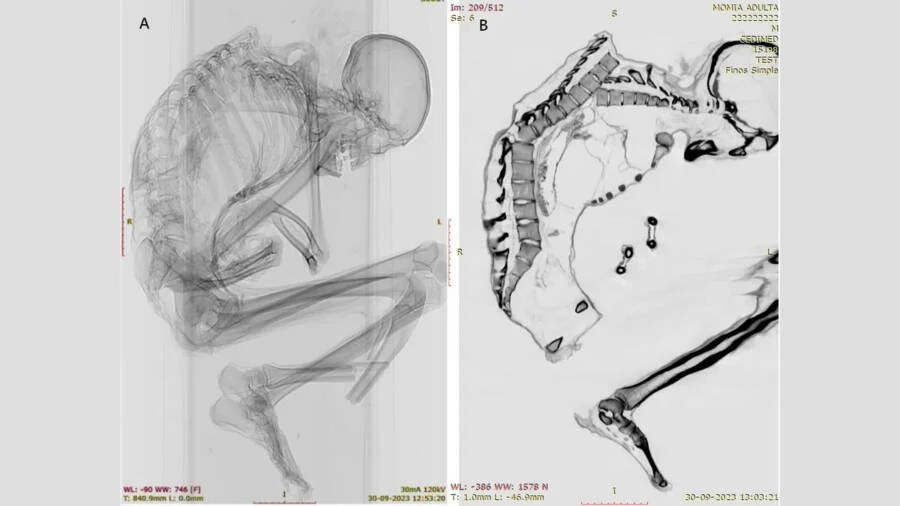
Researchers used computed tomography (CT) scans to create virtual 3D reconstructions of the bodies of three mummified bodies from Chile and Peru to see how they died. One male was hit on the head and stabbed in the back. Another looks to have been hit hard in the neck dislocating his head. Their skeletons would not have told of these factors. The mummies were preserved in very dry desert environments. The mummies were dated to as far back as 1,200 years ago. One was buried with his fishing tools. The other two were buried with woven cotton and hair from llamas. The female died from natural causes.
A New Elaborate Tomb Has Been Uncovered at the Pacopampa site in Peru
A possible tomb of a religious leader has been uncovered at the Pacopampa site in Peru dating to 1000 CE. He died at age 25-35 years of age. He was buried with musical instruments and exotic artifacts. The tomb was sealed with a huge rock weighing half a ton. In the tomb, archaeologists found seashell necklaces, malachite beads, and semi-precious stone earmuffs. And they also found pututos or shell trumpets. Strums snails were found imported from far away Ecuador.
The Pacopampa complex has 12 sites within it of great importance. The tombs in the complex are dated to 2,900 years ago.
76 More Child Sacrifices Uncovered at the Chimu Site of Pampa La Cruz in Peru
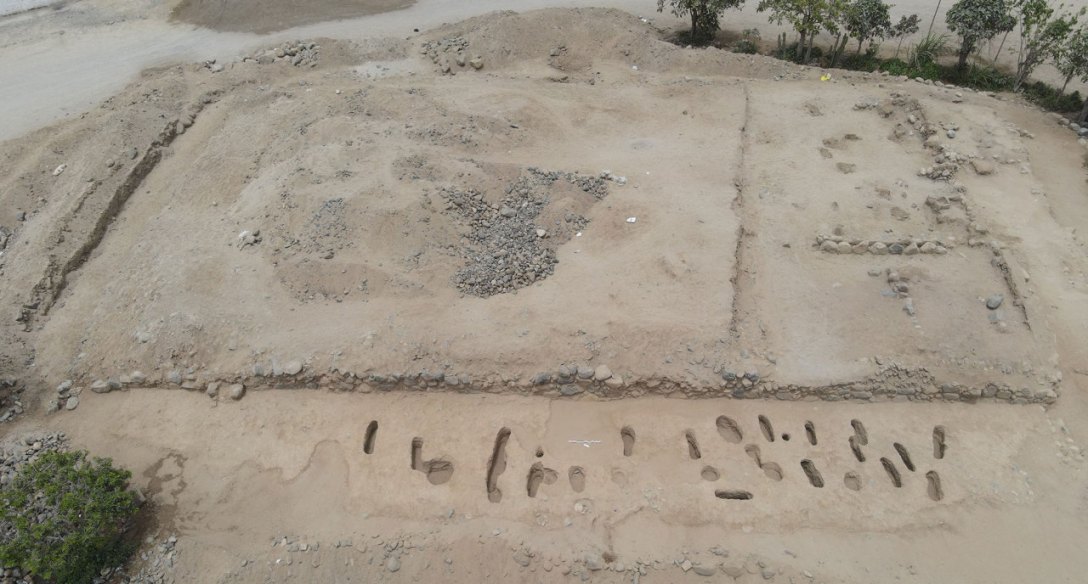
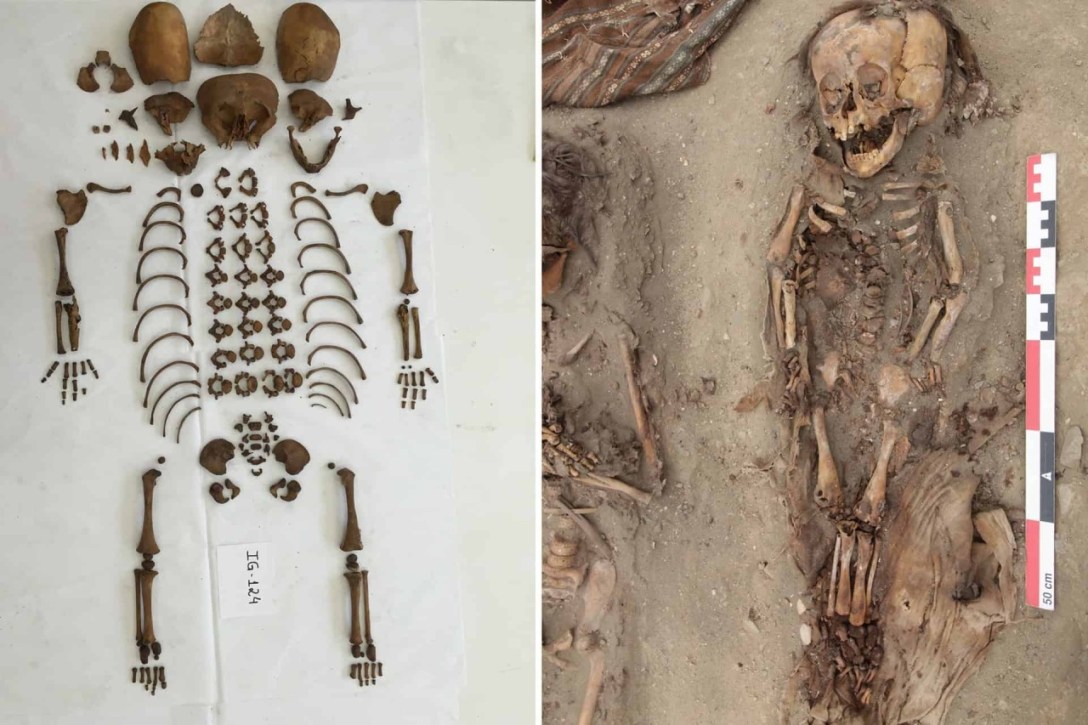
Seventy-six more child sacrifices uncovered at the Chimu site of Pampa La Cruz with their hearts removed. All had a transversal clean cut across the sternum to open their rib cages to remove their hearts. They were buried on top of an artificial mound. So far, 323 child sacrifices have been found there, and 137 child and 3 adult sacrifices at the nearby site of Las Llamas, also with their hearts removed. They may find as many as 1,000 children. The earlier sacrifices found dated to 1100-1200 CE. The newly recovered 76 still have to be radiocarbon dated.
The Chimu built an artificial irrigation system and new agricultural fields nearby and may have sacrificed the children to sanctify these projects. El Niño may have played a role as the children may have been sacrificed to appease the gods during bad weather events.
Huge Hidden Chambers and Passageways Being Studied at the Chavín de Huántar Site in Peru
Archaeologists have found hidden passageways and galleries inside the Chavín de Huántar in Peru. These were probably used for religious rituals using psychedelic drugs. Sensory deprivation and religious chambers were in the larger galleries.
“These are stone-lined passageways, corridors, rooms, cells, and niches, big enough to walk through, roofed with stone beams.” Built in stages between 1200 BCE-200 BCE.
36 galleries and their associated passageways have now been found at Chavín de Huántar over 15 years of excavations. The latest network was detected only a few years ago and was not explored until this year. They were found in 2019. The complex was a center for the Chavin culture. The site is 10,000 feet high and the largest Chavin religious site.
Passageways led to a main gallery with two ritual stone bowls, one decorated as a condor. The two bowls were probably used to grind psychedelic drugs.
There was a tradition in Chavín to inhale hallucinogenic snuff made from seed pods of the vilca tree, which contain a powerful hallucinogenic substance that includes dimethyltryptamine, or DMT.
Major excavations wil begin soon.
Remarkably Preserved Wooden Figure Found at the Site of Chan Chan in Peru
A perfectly preserved wooden figure has been uncovered at the Chimor culture Chan Chan site in Peru. Chan Chan is the largest mud brick city in the Americas dating to 850 CE-1470 CE. At 1200 CE, 100,000 lived at the city.
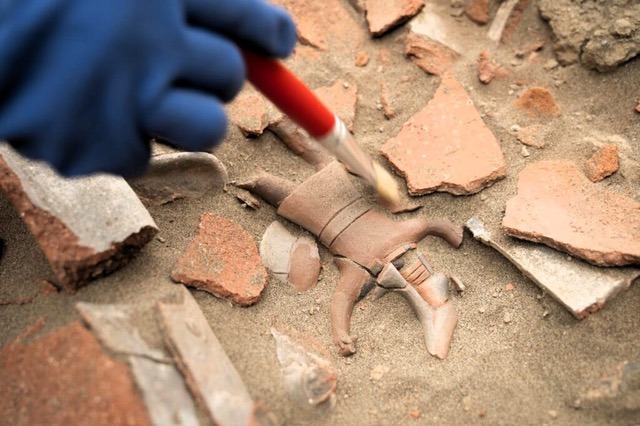
The figure is 46 centimeters long and 16 centimeters high and represents a human figure with a trapezoid-shaped hat decorated with seven vertical stripes of alternating light and dark colors. The nose protrudes from the plane of the face and the figure has almond-shaped eyes and circular ears with a black resin inside that would have served to affix mother-of-pearl plates. The character appearing to be a porter who carried high priests, dignitaries, and sacred objects. Its torso, arms, and hands appear to have been painted red, and dark circular spots can be seen on its chest.
In addition, the character wears a triangular skirt, the edge of which is decorated with small rectangular bands, similar to those of the hat. Its legs are straight and its feet are set apart, and the fronts of them have been partially cut or broken off.
The Ministry of Culture also said that nectandra seeds were also recovered that would have formed a necklace (some have thread inserted), and under the sculpture a small black bag with brown and white thread decoration was recorded.
Researchers in the Peruvian Andes have uncovered 1,000 year old skulls showing the practice of trepanation. 32 skulls were uncovered and gave evidence of 45 separate procedures, all the skulls of men. It was forbidden to do this on women or children. Trepanation began as a practice at 200-600 CE. The Peruvian surgeons evolved their practice with new drills, cutting and scraping tools. They studied on skulls of the dead. They can see that patients survived after this surgery since bone grew back after the procedure.
Research leader Danielle Kurin said, “We can see where the trepanations are. We can see that they’re shaving the hair. We see the black smudge of an herbal remedy they put over the wound.” She used radiocarbon dating and insect casings to determine how long the bodies were left out before they were mummified, and multi-isotopic testing to reconstruct what they ate and where they were born.
The research is published in the American Journal of Physical Anthropology
Ancient Sican Culture Surgeon’s Tomb Uncovered in Lambayeque
Archaeologists have uncovered the tomb of a Sican culture surgeon in the Lambayeque region of Peru. The surgeon was buried in a lotus flower position sitting cross legged. He was surrounded by knives, needles and tumis. The tomb is dated at 900-1,050 years old. The tomb was in a ceremonial temple. He wore a golden mask and he was a specialist in cranial trepanations. This procedure was done to remove hematomas and remove fractured skull pieces incurred in combat.
The tomb artifacts included a golden mask with feathered eyes, a bronze breastplate, and surgical instruments such as tumis or knives with a crescent-shaped edge (made of a mixture of gold and silver), dozens of knives with wooden handles, awls and needles. The bark of an unknown tree was found that would be one of the plant species used as an analgesic or infusion.
The tomb is in the Huaca Las Ventanas which began excavations in 2010-11. The Sican culture spanned 700-1375 CE.
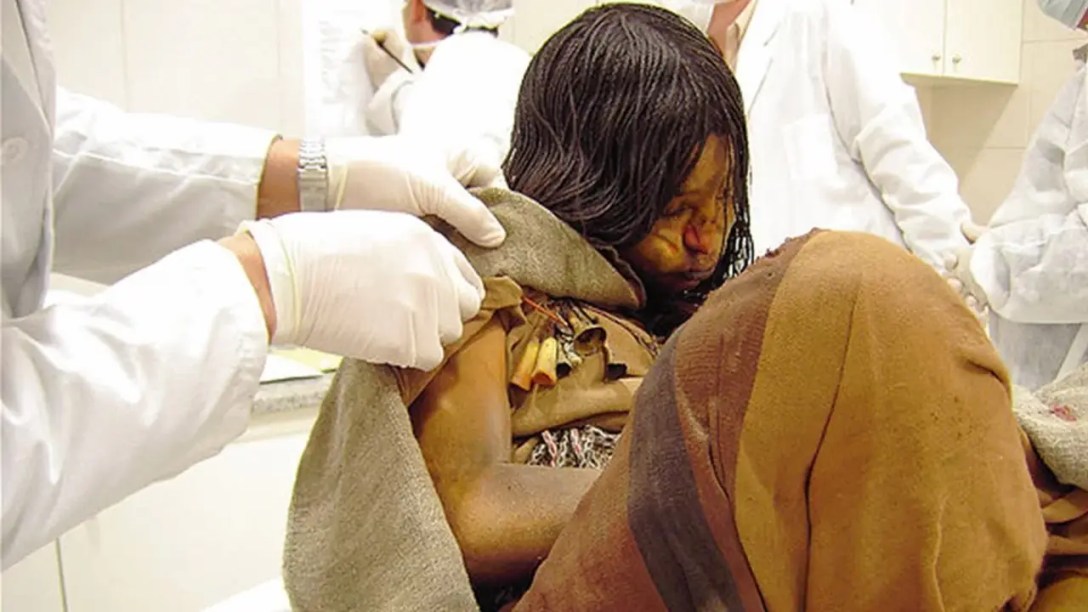
Researchers in Peru conducted toxicology tests on a hair strand and fingernails of two children and found they had been drugged during sacrificial rites. The remains are 500 years old. They were given ayahuasca and cocaine. The children were sacrificed to the gods to avert natural disasters. In this study. The children were sacrificed in the Ampato volcano.
The research is published in the Journal of Archaeological Science
This practice was earlier reported with the discovery of three Inca mummies also found in a volcano in Argentina. Three girls aged 13 and younger were selected out for sacrifice a year before their deaths. Using biochemical analysis of the hair of the children showed consumption of coca and alcohol. The children were separated from their parents and put under the care of priestesses. They fed the children elite food like maize and llama meat. In the last 6-8 weeks of life, coca and alcohol use surged. Chewed coca leaves were found in the mouth of the 13 year old. The children were put into a stupor before their death. They were brought to a high altitude and buried with spondylus shells from the coast, feathered headdresses from the Amazon, figurines of gold and silver.
New Discovery of White Pigment in Ancient Peru Changes the History of Color
1908, a lab in Niagara Falls invented a white pigment that is found in everything from plastic to pills. It is made from the chemical titanium dioxide.
In 2018, researchers in the United States discovered titanium white in 400-plus-year-old ceremonial wooden drinking cups made by the Inca and residing today in various museums. Carved with elaborate geometrical designs, the cups, called qeros, traditionally were not colored. But around the time of the Spanish conquest of Peru in 1530, the Inca started mixing pigments, including titanium white, into resin and decorating qeros with the bright goo.
How did the Inca jump 400 years into the future? There is a deposit, the Giacomo Deposit, at the Chile/Peru border that contains titanium dioxide and silica. The qeros in the museums look like the deposits at Giacomo.
Chincha of Ancient Peru Threaded the Spines of Their Dead
Spanish invaders in ancient Peru looted burials to take out gold and silver from the textiles that wrapped the bodies of the dead. Local Chincha people then tried to put the bodies of their dead back together. The Chincha were a wealthy society of 30,000 people that included fishers and farmers, known as sea-faring merchants.
Researchers have found human vertebrae carefully threaded on to reed posts in the Chincha valley of Peru. 200 found so far. Radio carbon dates show the individuals died between 1520-1550.
It is plausible the action was a response to colonial looting, but many Andean societies revisited the remains of their dead which periodically brought out their mummies and gave them drinks before returning them to their tombs.
Sacrificed Children Uncoverered at the ancient Peru site of Cajamarquilla
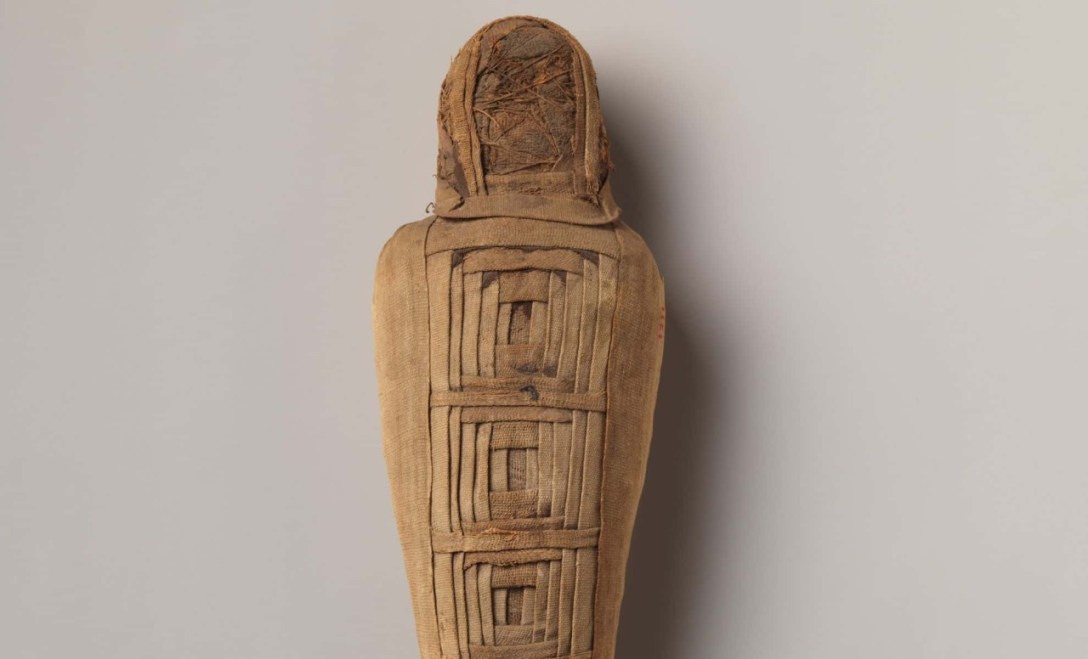
Archaeologists in Peru, at the site of Cajamarquilla have found six mummified children and 14 others sacrificed to accompany a dead nobleman to the afterlife in a tomb. The children were wrapped in a tight cloth. They were likely sacrificed for a nobleman. They were placed at the entrances to the tomb on top of each other. Cajamarquilla was built of mud beginning in 200 BCE and occupied till 1500 CE. The mummies were buried around 1,200 years ago. Buried llamas and earthenware has also been found in the tomb.
The nobleman was about 20 years old, buried with his hands covering his face and tied up with rope.
The Wari timeline stretched from the 7th to 12th century. A National Geographic team explored site in 2012. A team led by the University of Poland along with a Peruvian team found a passage through buried walls, Four women, including a queen and possible princesses. 54 other elite were also found.The excavations included finding a copper ceremonial ax and a silver goblet.
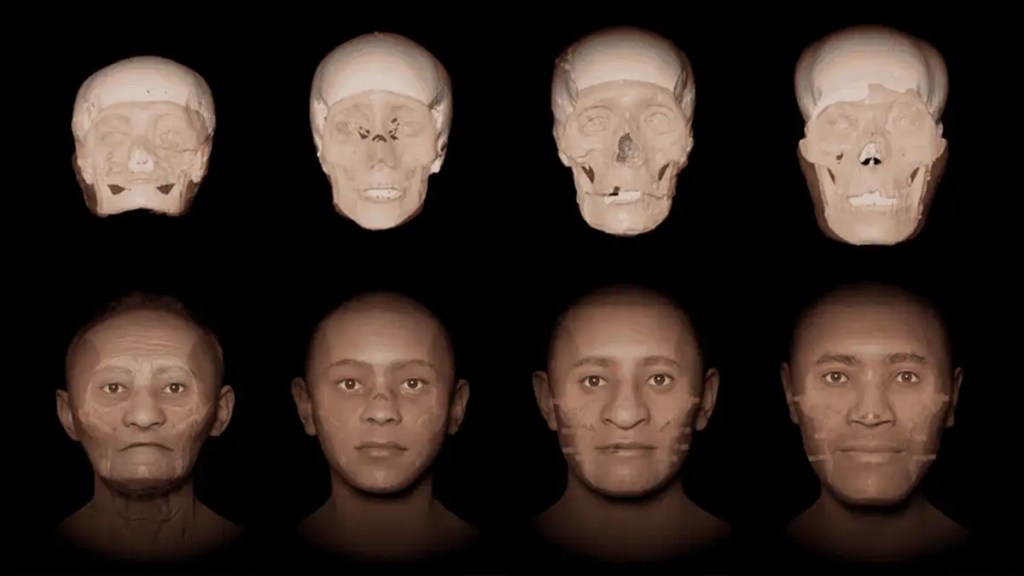
A forensic expert from Sweden has re-created the face of the queen who lived at the site of El Castillo de Huarmey. They used a computed tomography (CT) scanner to make a virtual, 3D image of the skull. The data sent the digital data to a 3D printer, which made a replica of the skull in vinyl plastic.
It’s important to know the person’s sex, age, weight and ethnicity — factors that influence the thickness of facial tissue
The report in Live Science states that forensic expert Nilsson knew the Huarmey Queen was at least 60 years old. Armed with that knowledge, he put 30 plastic pegs all over the queen’s replica skull. After this, he sculpted the face. This was made from the ‘inside out,’ muscle by muscle.” He used plasticine clay to sculpt the muscles, relying on methods that help forensic artists reliably rebuild a person’s eyes, nose and mouth. “The ears are more speculative,” he said.
Next, he covered the muscles with a layer of skin. “Details, wrinkles and poresare sculpted to get it [to be] realistic,” he said. “When I’m finished sculpting the face, I make a mold, in which I then cast the face in silicone. In this way, I can get it very realistic. Nilsson used prosthetic eyes in the reconstruction, as well as real human hair that he inserted, strand by strand, into the silicon scalp. "We actually used Peruvian human hair, bought in Peru by the Polish archeological team,” he noted. He even gave the royal woman metal earrings with a golden and worn patina. “They are an exact replica of her actual earrings, found in her tomb,” he said.
Nilsson spent 220 hours on the queen’s reconstruction. She looks wise [and] experienced, as well as a bit tired and maybe sad, or thoughtful,“ The technique Nilsson used to re-create the ancient queen’s likeness is also used by law-enforcement agencies when a victim cannot be identified. About 70 percent of these cases are solved once a reconstruction is made, he said. "It is not a portrait of the deceased, but you get a good image of what the face looked like.” The Wari queen’s reconstruction is now on display in a new Peruvian exhibit at the National Ethnographic Museum in Warsaw, Poland.
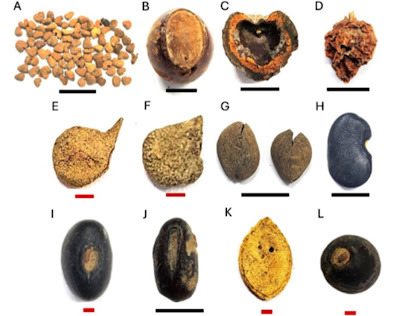
Archaeologists are researching the site of Quilcapampa built by the Wari culture in Peru (550-1000 CE), occupied between 800-850 CE. They found a pit with a million seeds of Schinus molle: Peruvian pepper used to make a beer like drink, chicha. In another post they found seeds from the Vilca tree which are hallucinogenic in nature. Drinking chicha with this substance would provide a controlled and mild hallucinogenic high. Taken without the chicha gives one the impression of flying. This hallucinogen was widely used in Andean cultures.
Wari leaders probably used this experience to guests to solidify bonds between groups in the area.
The research is published in Antiquity, DOI: 10.15184/aqy.2021.177
Researchers using LIDAR at the site of Machu Picchu in Peru at the nearby site of Chachabamba, where elite groups had to stop to purify themselves in a sacred bath before entering Machu Picchu, have uncovered 12 structures, and stone channels, some underground, supplied water to people in the area. They are able to map how the water was channeled to the sacred baths.
The scientists used a type of remote-sensing technology known as light detection and ranging, or lidar, which bounces laser pulses off surfaces to detect features and map their contours.
The team from Wroclaw University of Science and Technology in Poland and Peru’s Ministry of Culture used drones with LIDAR to peer through the forest canopy. The researchers will return to the area after COVID subsides in the region.
The research is published in the Journal of Archaeological Science.
Researchers studying ancient Peruvian skull with a metal implant
Archaeologists have found a 2,000 year old skull bound by metal in Peru. The skull was of an ancient Peruvian warrior. The skull is at the Museum of Osteology in Oklahoma. Ancient Peruvian surgeons carried out this surgery on a badly wounded warrior. They used a metal alloy that is made of material that is unknown.
The metal tightly bound the broken skull bones together. Often silver and gold was used for this kind of procedure.
New DNA studies of 2,000 Year Old Mummies in South America
Scientists have recovered DNA from the skin cells on the scalp and clothes of 2,000 year old mummies from Argentina, Chile, and Ecuador. Female lice deposit eggs in the hair of the mummies and the mummy skin cells become incased in the cement produced by the female lice. The skin cells can also elicit information about how people lived and died 2,000 years ago run South America.
These nit samples are as concentrated as DNA samples from teeth, double that of human bones, and four times as much as blood.
Their health and even cause of death can be indicated by the interpretation of the biology of the nits.
The University of Reading did the initial research.
Mass Grave of Textile Artists Uncovered at Chan Chan
Archaeologists at the ancient Chimu site of Chan Chan in Peru have uncovered a mass grave with mostly women, a few children and teens buried there. They were textile artists. They were surrounded by textile tools, needles, spindles and chalk. They were buried in a seated position with legs bent, and most aged under 30. But the average life expectancy was 40. These were elite people buried here. They were wrapped in cotton and a fabric made from plant tissue.
It is not known yet how these people died. The burial place contained people who died at different times. Some of the remains were brought from a different burial group.
Archaeologists at the site of El Rayo in Nicaragua uncovered a strange gravesite with two bodies and three heads that did not belong to either body. One body was laying on its belly and was only the bottom half of the body. One looks to be a teenager with one skill in a bowl at its feet, and another skull in another pot. The three skulls were lined up on top of the bodies. Nicaraguans may be from Mesoamerica or from further south in Columbia. Or distinct people. The pottery with the heads were vessels for cacao mixtures.
There are other burial sites in Nicaragua with heads in pots. Perhaps the younger one was faced down to enter the afterlife. Both were lying on a bed of pottery sherds. Nearby was a long red stone blade. Were the bodies and skulls relatives? Was headhunting involved. Or were these bodies and skulls buried at different times. Researchers will study the heads for ethnic differences or different tribes. Trophy heads have been found in other parts of Nicaragua.
Complex Roped Mummy Found at the Cajamarquilla archaeological site near Lima
Archaeologists at the Cajamarquilla archaeological site near Lima have uncovered a mummy fully bound in ropes with its hands covering its face. It dates to 1,200 CE. The site is being threatened by urban sprawl. The mummified individual lived high in the Andes 600 years before the rise of the Incas. The tomb in which the mummy was buried has stone tools, ceramic pots with vegetable matter. The area was multi-ethnic.
Archaeologists in Peru have uncovered monumental adobe structures At the Los Moteros site in the desert region of the northern coast or Peru. The structures are dated to 5,100-5,500 years ago. Carol-Supe culture structures. This was the starting point for the evolution of complex adobe construction in Peru stretching over thousands of years. The Los Moteros structures were found by radar. And only adobe was used with no additions for stability. The clay deposits were in a place probably created by El Niño flooding.
Radar was used to detect an underground structure at the Los Morteros archaeological site measuring 10 meters (33 feet) long, seven meters wide and two meters tall. After it was unearthed, Mauricio and her colleagues were astounded to see that the walls were made of adobe, which was unprecedented for that era.
The archaeologists observed that the adobe bricks were made exclusively of clay and that no other material had been mixed in to provide greater stability, a clear indication that the architectural technique was in its very early stages.
An analysis of the bricks’ composition also showed that the adobes were cut from natural clay deposits located near the mouth of the Chao River and likely created by El Niño flooding.
The research was published in the Proceedings of the National Academy of Sciences (PNAS)
Archaeologist at Coral Find Proof of Major Structures at Caral Were Astronomically Oriented
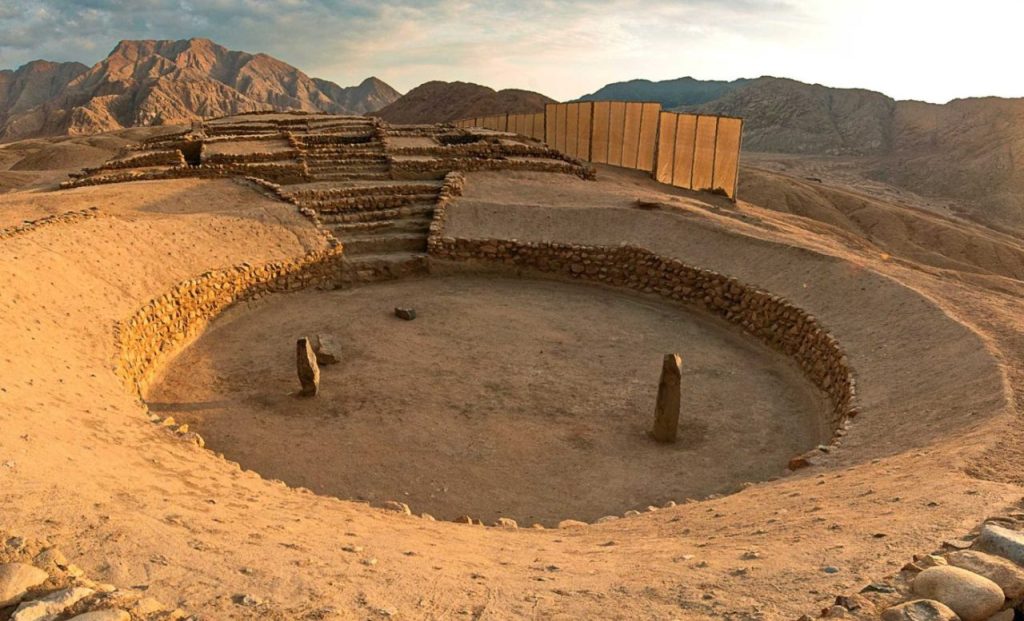
Archaeologists in Peru have found that the Caral civilization of ancient Peru, from 5,000 years ago, used astronomical calculations to build its most important structures. They studied 55 structures at 10 sites and found three orientations. “One toward the so-called major lunar standstill (when the moon’s range of declination reaches a maximum) and another toward sunrise in the summer solstice, which in the Southern Hemisphere occurs in December.”
"A third, weaker orientation was toward the rising of Sirius, the brightest star at night in the Southern Hemisphere.”
“It is not by chance that during every summer solstice the first rays of the sun enter through the stairs of the Caral Archaeological Site’s central pyramid and traverse its main hall through its niches. It’s very likely that a person had been on top of the buildings as the main point of observation to monitor both sunrises and sunsets, in the case of the solstices,”
The summer solstice is the start of the harvest period. The lunar standoff though only occurs every 18.6 years.
The Caral inhabitants built an underground observatory for the person to work at night under a covered area.
The research is in Latin American Antiquity Journal
Archaeologists in Colombia have found eight ceramic jars, with metallic figurines and emeralds inside a temple and its adjacent graves.
The Muisca (also called the Chibcha) crafted the jars called “ofrendatarios” 600 years ago. Their work may have inspired the legend of El Dorado — a legendary city made of gold.
Archaeologists uncovered the temple and graves in the remains of an ancient Muisca town located near Bogotá, A team led by archaeologist Francisco Correa, an archaeologist who conducts excavations prior to construction work, found the ofrendatarios prior to road construction in the area.
Some of the figurines look like snakes and other animals, while others look more like people with headdresses, staffs and weapons. The temple where the ofrendatarios were found may be related to ancestor worship.
Ofrendatarios like these have been found at other ancient Muisca sites.
They also be related to deities worshipped by the Muisca.
The Muisca were experts in metal crafting. There were no gold mines nearby, so the ancient Muisca traded for the metal with other groups.
Ancient Parrot and Macaw Remains Found in the Atacama Desert of Chile
In the driest desert in the world, the Atacama desert of Chile, archaeologists have found that parrots and macaws were imported there from 1100-1450 CE.. Feathers were found in burials, leather boxes and other material. They also found mummified birds. The birds had to be transported across steppes, cold weather, difficult terrain. The team found 27 remains of Scarlet Macaws and Amazon parrots
Using zooarchaeological analysis, isotopic dietary reconstruction, radiocarbon dating and ancient DNA testing, the research cataloged scarlet macaws and at least five other parrot species that were transported from over 300 miles away in the eastern Amazon. Their feathers were plucked as they grew them. The mummified birds had their mouths open and tongues out or had their wings spread.
The birds ate the same food as humans enriched with the nitrogen from maize fertilized with marine bird manure. They were brought by llama caravans across the Andes and the desert. Difficult for the llamas to traverse. Reference: “Pre-Columbian transregional captive rearing of Amazonian parrots in the Atacama Desert” by José M. Capriles, Calogero M. Santoro, Richard J. George, Eliana Flores Bedregal, Douglas J. Kennett, Logan Kistler and Francisco Rothhammer, 29 March 2021, Proceedings of the National Academy of Sciences. DOI: 10.1073/pnas.2020020118
Giant Building Discovered Under the Monte Alban Main Plaza
Researchers at Monte Alban, Oaxaca have discovered an ancient building under the main plaza there. The team that made the discovery was led by Dr. Marc Levine, assistant curator of archaeology at the Sam Noble Oklahoma Museum of Natural History and assistant professor in the Department of Anthropology, College of Arts and Sciences.
The team used drones to digitally map the main plaza, three geophysical prospection techniques — ground-penetrating radar, electrical resistance and gradiometry and high resolution 3-D images to uncover the large building for buildings. The team will spend the next two years analyzing the data.
The buried structure is 18 meters on a side and 30 meters below the surface, with stone walls a meter thick. The style resembles stone temples excavated in the 1930’s
The project was supported by the National Geographic Society, OU and the Sam Noble Museum. Others involved in the research include Scott Hammerstedt, research faculty at the Oklahoma Archeological Survey; Amanda Regnier, director of the Oklahoma Archeological Survey; Marcus Winter from the Oaxaca center of the Instituto Nacional de Antropología e Historia; and Alex Elvis Badillo from Indiana State University. Detailed results of this project are published in the journal Latin American Antiquity.
Dr. Levine sent me a .pdf of his research report but our server cannot process these kinds of attachments for virus protection and band width reasons. I will ask him if he can send his research as a URL. It is in Latin American Antiquity,
Great Rock Art Discovery made in the Columbian Amazon
A groundbreaking discovery of ancient rock art in the Amazon rain forest of Columbia has led to observers calling this the Sistine Chapel of the Ancients.
Tens of thousands of paintings of animals and humans created at 10,500 BCE stretch eight miles on cliff faces. Depictions of now extinct animals like the mastodon, camelids, giant sloths, ice age horses tell us the date of these paintings. This discovery will take generations to study.
The discovery was made by a British-Colombian team, funded by the European Research Council. Its leader is José Iriarte, professor of archaeology at Exeter University and a leading expert on the Amazon and pre-Columbian history.
The images include fish, turtles, lizards and birds, as well as people dancing and holding hands, among other scenes. One figure wears a mask resembling a bird with a beak.
Many of the images are high up, some so high they could only be reached by drones. There are depictions of wooden towers among the paintings.
Many of these large animals appear surrounded by small men with their arms raised, almost worshipping these animals. Hallucinogenic plants are also portrayed.
Remains of the Ice Age meals of the inhabitants were also found at the site.
Some of the animals depicted could not have lived in the jungle, so the area must have been savanna like at that date.
There are many more paintings to be discovered there and will be explored when Covid is gone.
You can see this discovery on the Lost Kingdoms of the Amazon series. It is covered in episode 2 on Amazon on December 12.
University of Calgary and University of Huamanga researchers have uncovered the first known ‘naturally mummified’ remains of llamas. They were sacrificed at 1500 CE and had sacrificial markings.
They appear to have been buried alive. The Incas saw this kind of sacrifice as special offerings to the gods. Decorated guinea pigs were also found at the site as well as large ovens and tracings of feasts and celebrations. The animal sacrifice may have been an Inca ceremony to placate an annexed group. The graves were marked with tropical bird feathers.
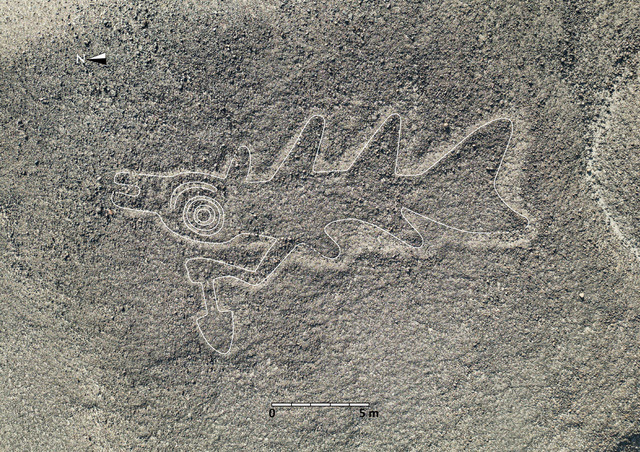
The geoglyph was about to disappear due to its placement on a steep slope. Between 80-100 new glyphs have been found in recent years, all pre-dating the Nazca culture. The cat geoglyph was created by the Paracas culture (500 BCE-200 CE). Paracas textiles show birds, cats and people that look like the new geoglyph.
An Important Inca Offering Found on a Reef Under Lake Titicaca
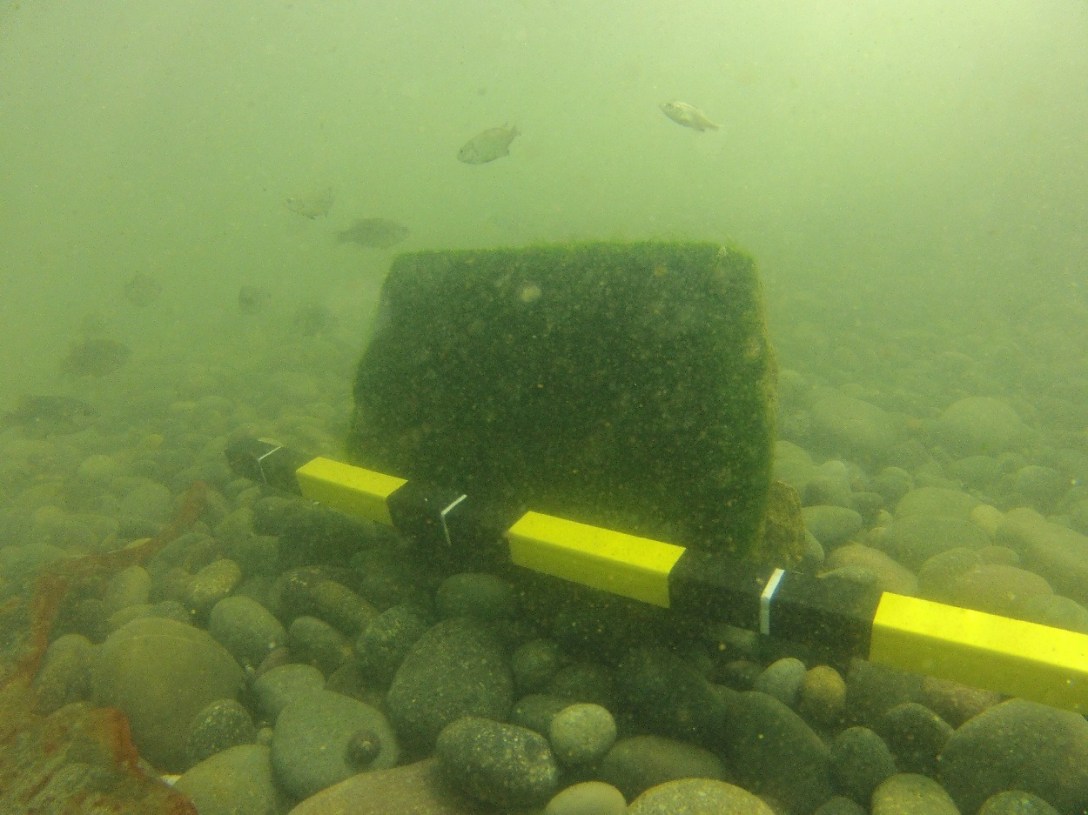
A llama carved from a spondylus shell and a cylindrical laminated gold foil object, dated at 1500 CE, were the contents of a Inca carved stone box found at the bottom of Lake Titicaca.
Divers found Inca offerings in earlier explorations in 1977 , and from 1988-1992 at the Koa reef. These new offerings were found at the K’akaya reef.
Researchers at the Université libre de Bruxelles have been investigating the reefs on the Bolivian side of Lake Titicaca. Lake Titicaca was a focal point for the Inca; a pilgrimage site, a place for alliances.
The lake is largely unexplored and there will be many more discoveries.
Native Americans Mixed with Polynesians 1150-1230 CE
We have been looking for proof for a long time. Finally DNA evidence is found.
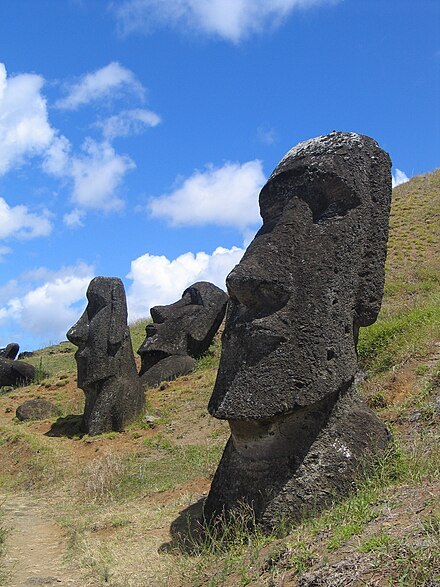
In the past, suspicions of this admixture were fueled by Polynesians cultivating a South American plant, the sweet potato. Long ago, Rapa Nui (Easter island) has evidence of ancient sweet potato fields, old stonework, and a Birdman cult that could be related to South America. Researchers studied DNA from 17 Pacific Island populations and 15 Native American populations from the Pacific coast of South America. A genome wide analysis of 807 people .was undertaken Several Polynesian populations have evidence of a background signature originating from South America. The Rapa Nui population has admixture from northern coastal people of South America. The same signatures were found in the Marquesas and Tuamotu Islands. The earliest signatures are dated to 1150 in the Marquesas and to Rapa Nui by 1380. The evidence points to Columbia as the place in South America where contact was made to Polynesians. This also suggests South Americans may have made it to some Polynesian islands before the Polynesians arrived.
It is possible Polynesian populations sailed to South America and returned to Polynesia with South Americans aboard or had mixed with South Americans before returning. More genetic studies will be made.
The early sweet potato plants have South American variations. And there may have been many contacts over this early phase.
DNA studies will be necessary to answer some of the remaining questions, and they should analyze living populations not included in the authors’ study, as well as DNA extracted from ancient bones. Nevertheless, Ioannidis and colleagues’ core findings have finally solved the mystery about a possible early Native South American physical presence in eastern Polynesia, and that is a great contribution.
The NY Times adds that the evidence points to the Zenu people of Columbia was the possible group that made contact in Polynesia. Also Polynesians could have spent more time in coastal islands off of the South American coast. Mocha Island, off of the coast of Chile, has skulls that have been studied that look very Polynesian in shape. https://www.nytimes.com/2020/07/08/science/polynesian-ancestry.html
Hundreds of Newly Discovered Geoglyphs Older Than Nazca Being Discovered
Johny Isla, chief archaeologist for the Nazca and Palpa Lines for Peru’s ministry of culture, saw an image of a Nazca geoglyph in a German exhibit in 2014. He had never seen this glyph. It was of a killer whale deity, Using drones, he found the image 30 miles from Nazca. It depicts a mythological beast, part orca but with a human arm holding a trophy head and several more heads inside its body.
New drone research has now uncovered hundreds of such figures near Nazca which pre-date the Nazca lines by 1,500 years. They were created by the Paracas and Topará cultures between 500BC and AD200.
On one hillside, a warrior wearing a headdress and carrying a staff or spear stands close to a female figure. Between them is a mythological creature with a mass of tentacles or snakes. The figures are believed to symbolise fertility.
From the ground, the designs are now hard to see. But the drone’s eagle-eye reveals the full design on a monitor viewed by Castillo.
Photogrammetry is being utilized in the search. This is a highly detailed three-dimensional mapping of large areas. While the team have discovered hundreds of geoglyphs in Palpa, Castillo expects to find many more. “We’ve registered maybe just 5% of what there is,” he says.
Harvard and U.of C, Santa Cruz researchers, and researchers from Argentina, Australia, Bolivia, Chile, Germany, Peru, the United Kingdom and the United States, undertook a genome study of 89 Ancient Andeans who lived between 500-9000 years ago, including the Moche, Nasca, Wari, Tiwanaku and Inca. They found that groups in the Andean highlands became genetically distinct from those along the Pacific Coast. North and South groups differentiated from each other 5,800 years ago.
They found genetic mixing between the Andes, south Peru, Argentina, and the Amazon. This demonstrates large migrations. Now they need to find out more about those migrations. There was genetic continuity among large scale Andean populations like the Moche Wari, and Nasca, so invading military forces did not alter the genetics of the population.
The Rise and Fall of the Wari Complex of Cerro Baul in Peru
1,400 years ago, Wari colonists arrived in the Moquegua Valley in southern Peru. They occupied high dry land no one had used. They built a regional capital at the site of Cerro Baul, where they built large government structures and erected canals and aqueducts that carried water further than anyone had ever attempted. They carved mountain slopes into agricultural terraces, which captured rain and snowmelt to plots of maize, quinoa, berries to make beer. People moved there to create a large labor force.
Archaeologist Patrick Ryan Williams of the Field Museum calls the Wari strategy “conquest by hydraulic superiority.
Despite the Wari very violent aggression in other areas of Peru, they built a multi-ethnic society of relative peace in the Cerro Baul area for 400 years. Wari, Tiwanaku and local communities lived together from 600-1000 CE. Each culture maintained its own styles of pottery, architecture, temples and burials.
A huge earthquake destroyed the aqueduct system around 900 CE, and its appears the Wari had a hard time getting a work force to fix the damage completely. And then an extreme drought took place at a time that the aqueduct system was weaker. At 1050, the Cerro Baul structures were abandoned, and in a huge end times feast, rooms were burned, a brewery was destroyed, and smashed drinking vessels were placed on top.
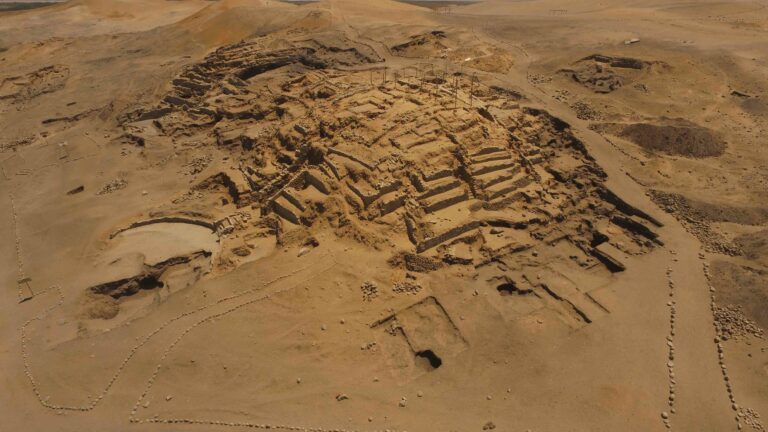
A massive pyramidal structure has been uncovered at the Sechin Archaeological Project dating back to 3000 BCE. The archaeologists dug deep and found a series of steps that may have served as the seat of government of the ancient Sechin culture. They also found two skulls of an adult and child and a dismembered skeleton. There is an adobe wall at the top of the steps with the ancient fingerprints of the builders made when they put their fingers into the wet clay of the bricks.
A 3,000-year-old ‘water cult’ temple used for fertility rituals has been discovered in Peru in the Lambayeque region by a team of Peruvian archaeologists led by the famed Walter Alva. The tempo includes large blocks and a central staircase. It is located in the springs of the Zana valley and has holes similar to other water cult sites.
Huge walls surround the temple.
There are 21 tombs there dating to 1500 BCE-292 CE. Ceramics and metal object including knives. The tombs were re-used by the Inca in a later era.
The temple’s age is in the formative period predates major hydraulic works. It is located between rivers and there are small wells shows that this site is one where water is shown to be of great importance in the Formative period. The temple was abandoned by 250 BCE. After the Chimu culture used it as a burial place around 1300 CE.
20 of the burials were from the Chimu era. There was one Formative era burial buried east to west and with a ceramic bottle with two spouts and a bridge handle that was a Formative era style
It was built in three stages; 1500-800 BCE the foundations were built. 800 BCE-400 BCE the temple was built with Chavin influences. 400-100 BCE circular columns used to hold up the roof.
Japanese archaeologists have found 143 new Nazca geoglyphs dated at 300-100 BCE, some so large, they can only be seen from the air. They have been working on this since 2004. The geoglyphs were created by removing the black stones of the top soil to expose the white sand below. The team used high resolution satellite images along with fieldwork. The oldest geoglyphs are from 16 feet to 165 feet. The newer ones are 300 feet on average.
The larger ones are often animals and are placed at ritual sites it is thought. Various pottery were destroyed in the ritual. The smaller ones are on paths that could have been way posts for travelers to got toward the larger geoglyphs, for ritual activity.
IBM developed an AI device running a geospatial analytics system on the IBM Watson Machine Learning Accelerator (WMLA), which sifted through huge volumes of drone and satellite imagery, to see if it could spot any hidden markings bearing a relation to the Nazca lines. This machinery will be in use into the future.
Children Buried with Human Skull Helmets Uncovered in Ecuador
Archaeologists in Ecuador have found two babies buried with helmets made from the skulls of other children. They are dated to 100 BCE. They were part of the Guangala culture. The same grave complex uncovered 11 individuals buried with shells and stone ancestor figurines. This may have been an attempt to protect the unsocialized very young children’s souls, and the stoned ancestor figurines may also have been protective devices. Further analysis of the skulls are being carried out to find out more about these individuals. Anemia has been detected in all of the skulls.
LIDAR Expands Our Understanding of an Ancient Peruvian Site near Machu Picchu that is Larger and Older than Machu Picchu
Archaeologists have expanded our knowledge of an Inca site in the area of Machu Picchu that is older than that site. They enhanced our view of the site using LIDAR. The site is at 13,000 feet, 5000 feet higher than Machu Picchu. The site was known to archaeologists investigating on the ground, but LIDAR allowed researchers to see never before known features. LIDAR allowed researchers to see Inca terracing and circular structures that began in the pre-Inca era that the Inca expanded upon, and the site is larger than Machu Picchu.
Archaeologists at the site of Pampa la Cruz in Peru have uncovered an elite Chimu individual buried with clothes made of exotic bird feathers over his head and body. A poncho like tabard was made of red and yellow feathers, and a headdress made of blue, white, green, black, and yellow feathers. The individual was buried in a squatting position similar to one found earlier with the same exotic feathers.
Update on Archaeologists Uncover Ancient Andean Massive Child Sacrifice
140 children and 200 Llamas were ritually sacrificed by the Chimu culture of the Ancient Andes, at the Huanchaquito-Las Llamas Site, dated to 1400 CE. Most of the children were between 5-14 years of age, and of both sexes. The site is a half mile from the huge Chimu site of Chan Chan. An earlier dig in 2011 uncovered an earlier mass child sacrifice of 42 children and 76 llamas. The dig continued at this site, and by 2016, the 140 child sacrifices were uncovered.
The children had red cinnabar on their faces, their chests were cut open to remove their hearts. A man and two women were sacrificed close by, by means of blunt force trauma. All were killed at a single event. The sacrificed were brought to the site from all over the Chimu empire. The cuts to the bodies indicate they were all killed by trained hands.
The sacrifice may have been an attempt to ward off the effects of El Nino.
Research on the victims will be ongoing at the site. There are other sacrifices of children and llamas in other areas. And this find may be just the tip of the iceberg according to the researchers.
Chilean archaeologists have researched four severed skulls from the late Inca era (1476-1534) which were buried in isolation with trash and without their bodies, at the site of Iglesia Colorada, in northern Chile. The skulls were modified with orifices in the cranium vault and defleshed mandibles. They look to have been mounted as trophy skulls as a ritualistic display of power over local subjects in their empire. The Inca mined copper in the area.
The skulls were found in 2003. Three of the skulls were females and one child. Five other skulls were found at the site. These may represent new ideological tools of control. The site was on the periphery of the Inca empire. Perhaps there was a rebellion there. The Inca may have been targeting weaker members, women and children, to preserve their male labor pool.
The findings are reported in Latin American Antiquity.
1,800 BCE Mural Uncovered at the Site of Vichama in Peru (Caral Civilization Site)
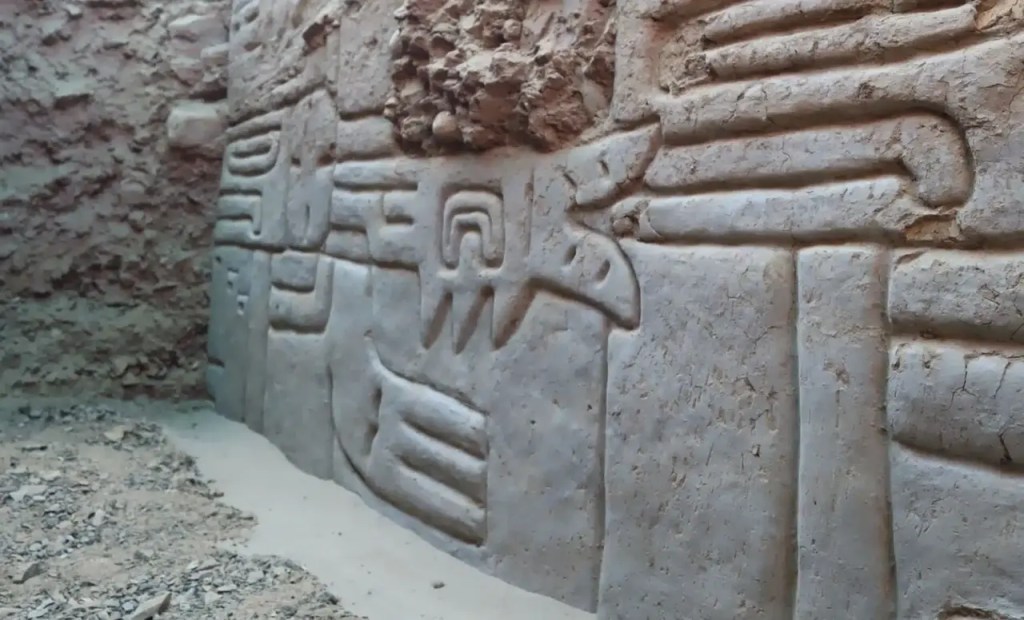
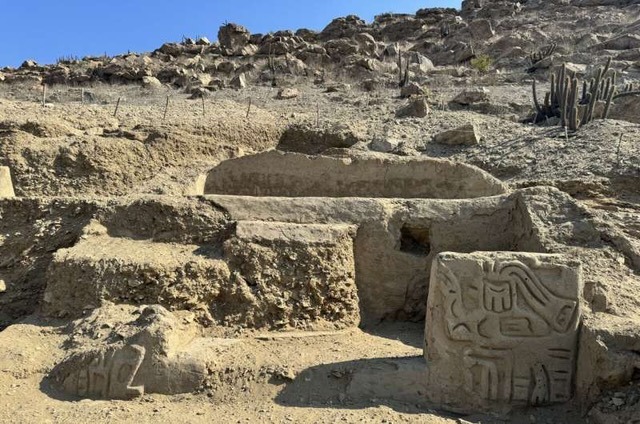
Archaeologists have uncovered a mural depicting a toad wrapping its hands around a human face at the site of Vichama in Peru. Archaeologist Ruth Shady explains the toad is a symbol for rain, and the aura,l suggests it is a prayer for rain. The mural may announce the coming of rain. The mural dates to 1,800 BCE.
Last year, in the same structure, other wall carvings were found at the entry to a ceremonial hall. The bas relief mural depicts four human heads with their eyes-closed and two snakes passing between and around them. These two snakes have their heads pointing at the image of what DW describes as “a humanoid seed symbol that is digging into the soil. These also depict the asking for the coming of rain, since the snake carvings may representations of a rain bearing water deity.
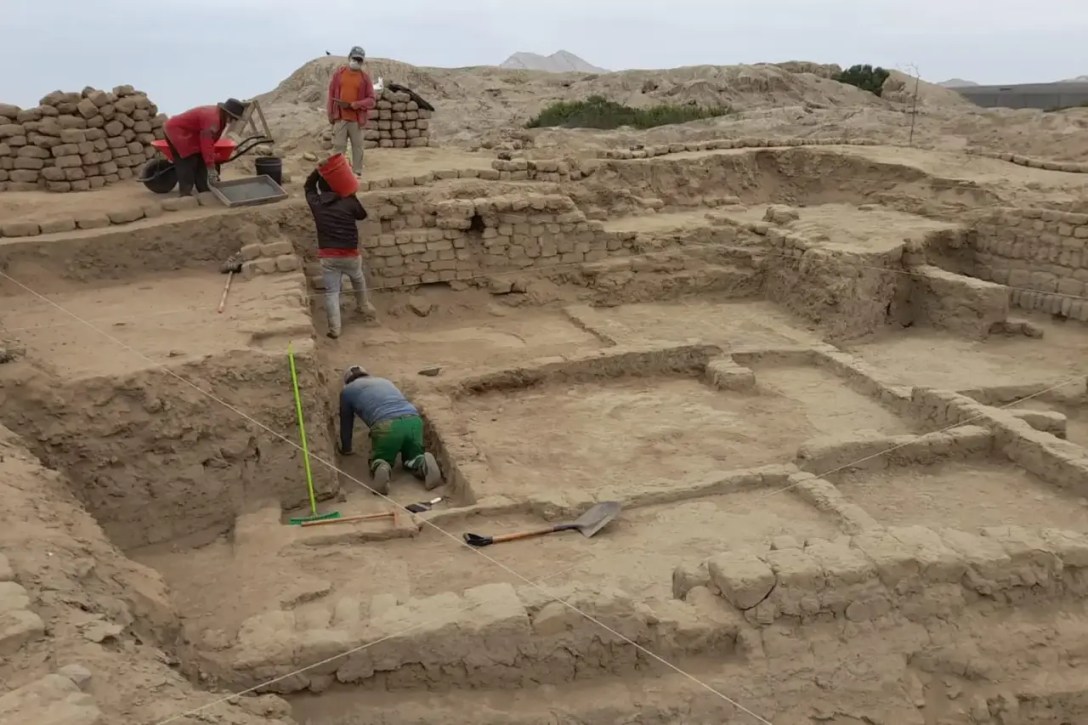
Vichama is 68 miles from Lima. The site existed at 3000-1800 BCE. Excavations started there in 2007. Murals representing the high status of women at the siren have also been uncovered.
Vichama is a site connected to the Caral/Norte Chico civilization. The site of Caral dates back to 3,000 BCE














 MIKE RUGGERI'S ANCIENT ANDEAN NEWS